
- Home
- Articles
- Patient guide
- Your First Acupuncture Appointment
Articles · Guide
Your First Acupuncture Appointment: What Happens, How It Feels, and What It Costs
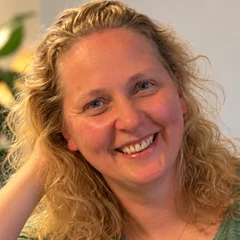
Written by Andrea Garratt, BSc (Hons), LicAc, MBAcC, acupuncturist and Chinese herbal medicine practitioner. Part of my patient guide to acupuncture in the Cotswolds.
Last reviewed 5 October 2026 · 7 min read · How these articles are written
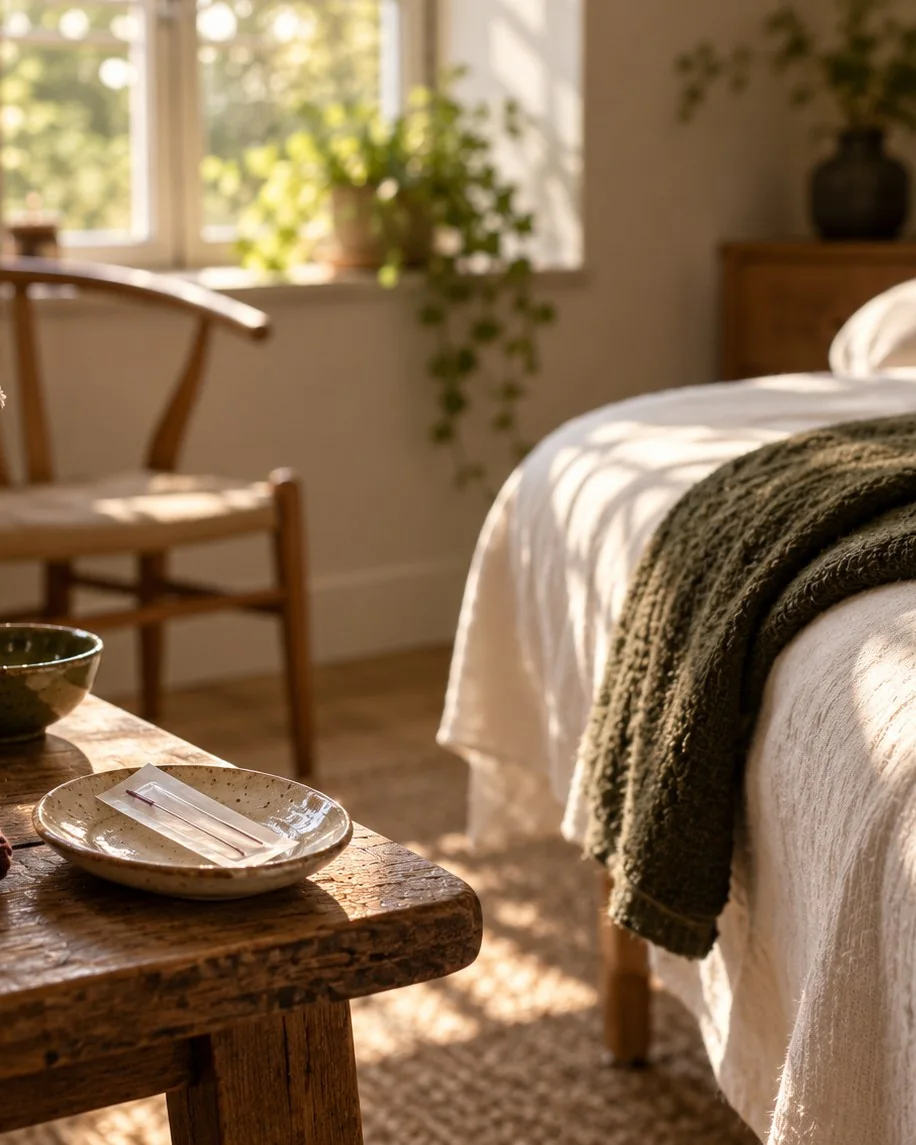
A first acupuncture appointment at Resolve lasts 60 to 75 minutes and costs £76. About half of it is a detailed conversation about your health, and the rest is treatment, with a small number of very fine, single-use needles left in place while you rest for twenty to thirty minutes. Most people feel little as the needles go in, then a dull ache or heaviness that fades. Most people start weekly and review progress together after a few sessions.
Key points
- A first appointment lasts 60 to 75 minutes and costs £76.
- About half of it is a detailed conversation about your health. The rest is treatment.
- The needles are very fine and single-use, and stay in for twenty to thirty minutes while you rest.
- Most people feel little as the needles go in, then a dull ache or heaviness that fades.
- Most people start weekly and review progress together after a few sessions.
Booking a first acupuncture appointment involves a small leap of faith. You're going to a stranger's clinic, telling them about your health, and agreeing to let them put needles in you, often while not entirely sure what any of it will feel like. Some people have been meaning to book for a year. A surprising number tell me they nearly cancelled on the morning.
Knowing exactly what will happen takes most of that nervousness away, so here's the whole thing, from booking to driving home.
Before you come
You can book online through my booking system, which will ask for a few details in advance. If you'd rather talk first, call me on 07702 928139 or send a message, and I'll tell you plainly if I think acupuncture isn't the right fit for what you're dealing with.
On the day:
- Eat a light meal an hour or two beforehand. Coming on an empty stomach makes feeling lightheaded more likely.
- Wear loose clothing that rolls up easily above the elbow and knee. Many points are on the lower arms and legs.
- Avoid alcohol beforehand.
- Bring a list of your medication and supplements, and any recent test results that feel relevant.
- Tell me if you take blood thinners, have a pacemaker or a bleeding disorder, have epilepsy, or might be pregnant. Each one changes how I treat.
If you're coming about headaches or your cycle, a few weeks of notes are especially useful. My guides to migraine and tension headaches and period pain and irregular cycles each explain what to track.
The consultation
The first part of the appointment is a conversation, and it's longer and broader than many people expect. We'll start with why you've come, then move through your medical history, medication, sleep, energy, digestion, appetite, how you feel the heat and cold, mood and stress, and for women, your menstrual cycle. Some of these questions might seem unrelated to the reason you booked. They're part of how traditional Chinese medicine builds a picture, because it looks at how different parts of your health fit together.
I'll also ask to look at your tongue and take your pulse at both wrists. These are traditional diagnostic methods, and they help me plan treatment within that framework. They're not a medical diagnosis, and if anything you tell me suggests you need one, I'll say so and suggest you see your GP.
The needles, and what they feel like
This is the part people worry about most. Acupuncture needles are solid, not hollow, and a fraction of the width of the needle used for a blood test. They're sterile, single-use and disposed of straight after treatment. I usually use a small number, often somewhere between six and twelve, though it varies.
Most people feel very little as the needle goes in, sometimes a brief prick. Once it's in place, you might notice a dull ache, a sense of heaviness, tingling or warmth around the point. That sensation usually settles within a few seconds. If anything feels sharp or uncomfortable, tell me and I'll adjust or remove the needle. You're in charge throughout, and you can stop at any time.
If you're frightened of needles, please mention it when you book. We can go slowly, I'll explain each step before I do it, and we can start with very few needles.
“Andrea is truly exceptional! Her deep knowledge, compassion and understanding put me completely at ease, even helping me overcome my fear of needles. She takes the time to listen and tailor the treatment… I couldn’t feel more supported or in better hands.”
Resting with the needles in
You'll lie comfortably, on your back or front depending on the points, with blankets and pillows as you need them. Needles usually stay in for twenty to thirty minutes. I'll stay nearby, and you can call me if you need anything. Many people find this part deeply relaxing, and a fair few fall asleep, which is entirely fine.
Afterwards
When the needles come out, I'll check how you feel and talk through a plan for the next few weeks. Most people drive home without any problem, but if you feel lightheaded, sit for a few minutes first. Minor after-effects are usually short-lived, and can include a small bruise or spot of bleeding where a needle was, or feeling tired. Occasionally, symptoms seem a little stronger for a day before settling. If you're worried about anything after treatment, contact me, and for anything that seems serious, contact your GP or NHS 111.
Is acupuncture safe?
With a properly trained practitioner, serious problems are rare. A large study of British Acupuncture Council members, published in the BMJ in 2001, looked at more than 34,000 treatments and recorded no serious adverse events. I follow the British Acupuncture Council's code of safe practice, which covers hygiene, needle handling and record keeping. You can check my British Acupuncture Council listing and read more about my training.
When to see your GP first
Acupuncture doesn't replace a medical assessment. If you have new, unexplained or worsening symptoms, see your GP before booking with me so they can be properly investigated. Keep taking any prescribed medication, and talk to the clinician who prescribed it before changing anything. For emergencies, call 999.
How many sessions you might need
It depends on what you're coming for and how long it's been going on. Most people start with weekly sessions. After four to six, we review together whether you feel it's worth continuing, and if so, how often. Some people then space treatment out to fortnightly or monthly. For headaches, NICE describes a course of up to ten sessions over five to eight weeks, which I use as a guide. I won't sign you up to a long block of sessions at the start.
What it costs
As of April 2026:
- Initial acupuncture consultation and treatment (60 to 75 minutes): £76
- Follow-up acupuncture (45 to 60 minutes): £56
- Initial Chinese herbal medicine consultation: £56, with herbs priced individually
- Herbal follow-up: £36
You can pay by card, cash, cheque or bank transfer. If you cancel within 24 hours of your appointment, there's a £35 late cancellation fee, so please give as much notice as you can. Full details are on my prices page. Some private health insurance policies cover treatment by British Acupuncture Council members, so it's worth checking yours. If you're interested in herbs as well, my guide to Chinese herbal medicine explains how herbal consultations work.
Getting here
The clinic is at 3 Wright Road, Upper Rissington, Gloucestershire GL54 2NP, with off-road parking. It's a short drive from Bourton-on-the-Water, Stow-on-the-Wold and Burford, and people also come from Northleach, Moreton-in-Marsh and Cheltenham. Appointments run Monday to Thursday, with early starts and evening slots on several days.
If you're coming for a specific reason, these guides go into more depth: acupuncture alongside IVF, acupuncture during menopause, and acupuncture for migraine and tension headaches.
Frequently asked questions
Does acupuncture hurt?
Most people feel very little as the needle goes in, because acupuncture needles are a fraction of the width of a blood-test needle. Once a needle is in place, you may notice a dull ache, heaviness, tingling or warmth around the point, which usually fades. If anything feels uncomfortable, the practitioner can adjust or remove the needle.
How long is a first acupuncture appointment?
At Resolve, the first appointment lasts 60 to 75 minutes and includes a full consultation and treatment. Follow-up sessions last 45 to 60 minutes.
How many acupuncture sessions will I need?
It depends on why you are coming and how long the problem has been going on. Most people start with weekly sessions and review progress after four to six. For headaches, NICE describes a course of up to 10 sessions over 5 to 8 weeks.
What should I do before acupuncture?
Eat a light meal an hour or two beforehand, wear loose clothing that rolls up easily above the elbow and knee, avoid alcohol on the day, and bring a list of your medication. Tell your practitioner if you take blood thinners, have a pacemaker or bleeding disorder, or might be pregnant.
Are there side effects after acupuncture?
Side effects are usually minor and short-lived, such as a small bruise, a little bleeding at a needle site, or feeling tired or lightheaded. Serious problems are rare when treatment is given by a properly trained practitioner.
Does health insurance cover acupuncture?
Some private health insurance policies cover treatment by acupuncturists on an accredited register, such as British Acupuncture Council members. Cover varies, so check your policy and whether you need a GP referral before booking.
Sources
- MacPherson H, et al. The York acupuncture safety study: prospective survey of 34,000 treatments by traditional acupuncturists. BMJ 2001;323:486. doi.org
- British Acupuncture Council. Code of Safe Practice; Find an acupuncturist. acupuncture.org.uk
- NHS. Acupuncture. nhs.uk
- NICE. Headaches in over 12s: diagnosis and management (CG150). nice.org.uk
This article is general information written by a British Acupuncture Council member. It is not a substitute for advice from your GP or specialist. Please don't stop or change prescribed treatment without speaking to the clinician who prescribed it.
Keep reading
Related articles
 Patient guideAcupuncture in the Cotswolds: a patient’s guideWhat acupuncture and Chinese herbal medicine involve, what UK regulators accept about the evidence, safety, cost and how to choose a practitioner.
 Herbal medicineSeeing a Chinese herbalist in the CotswoldsConsultations, regulation, safety checks, cost and online appointments.
 HeadachesAcupuncture for migraine and tension headachesWhat NICE recommends, what a course looks like and how to keep a headache diary.
Ready to book your first appointment?
You can book online in a couple of minutes. If you'd like to ask something first, call 07702 928139 or send me a message.