
- Home
- Articles
- Patient guide
- Period Pain and Irregular Cycles
Articles · Guide
Period Pain and Irregular Cycles: How Chinese Medicine Reads the Menstrual Cycle
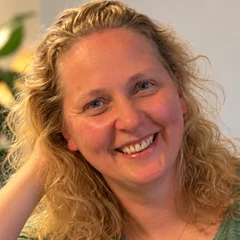
Written by Andrea Garratt, BSc (Hons), LicAc, MBAcC, with a postgraduate Diploma in Gynaecology, Fertility and Obstetrics. Part of my patient guide to acupuncture in the Cotswolds.
Last reviewed 5 October 2026 · 6 min read · How these articles are written
Painful, heavy or irregular periods should be checked by a GP first, because conditions such as endometriosis, fibroids and PCOS need medical diagnosis. The research on acupuncture for period pain is too weak to support treatment claims. What Chinese medicine offers is a detailed way of reading your cycle, and many women find that understanding useful alongside their medical care. This guide explains that approach and gives you a simple tracking routine to start with.
Key points
- See your GP first about painful, heavy or irregular periods. Endometriosis, fibroids and PCOS need medical diagnosis.
- The research on acupuncture for period pain is too weak to support treatment claims.
- Chinese medicine offers a detailed way of reading your cycle, used alongside your medical care.
- Tracking three cycles before your first appointment gives the clearest starting picture.
Most women can tell you, without looking at a calendar, roughly when their next period is due, because they can feel it coming. Some can feel it two days out; some, a week. For a lot of women that week is manageable. For others it means planning meetings around the worst day, carrying painkillers in every bag, or never quite knowing whether the cycle will run to 24 days or 45. Many have been told this is normal and to put up with it.
Some of it may be within the normal range, and some of it may not be. Either way, it deserves a proper look. This article explains how I approach the menstrual cycle as a practitioner of Chinese medicine, what the evidence does and doesn't show, and when to see your GP first.
What counts as a normal cycle
The NHS describes an average cycle as 28 days, counted from the first day of one period to the first day of the next, but anything from about 21 to 40 days can be normal. Periods usually last between two and seven days. The more useful question is what's normal for you, and whether that has changed.
When to see your GP first
Please see your GP before booking with me if you have any of the following: very heavy bleeding, such as needing to change a pad or tampon every hour or two, or passing clots larger than about 2.5cm; bleeding between periods, after sex or after the menopause; pain that over-the-counter painkillers don't control, or pain that stops you going to work or school; periods that have stopped for three months or more when you're not pregnant; or a noticeable change from your usual pattern. Endometriosis affects around 1 in 10 women in the UK and often takes years to diagnose, so if your pain is severe, it's worth asking about directly.
What the research says
A Cochrane review published in 2016 looked at acupuncture and acupressure for period pain. It concluded that the available trials were too low in quality to say whether acupuncture works for this. UK advertising regulators haven't accepted claims that acupuncture treats period pain, irregular cycles or premenstrual symptoms, so I won't tell you that it does. I'd also be wary of any clinic that does.
That leaves a fair question: why would anyone come to me about their cycle? The answer is that many women want more than a prescription and a "keep an eye on it". They want someone with time to go through their cycle in detail, help them see the pattern, and think about the rest of their health alongside it. That's the part I can offer with confidence.
How Chinese medicine reads the cycle
In traditional Chinese medicine, the cycle is usually described in four phases: the period itself, the days after it when the body rebuilds, the time around ovulation, and the days before the next period. Each phase is linked to different functions in the traditional model, so a symptom that appears in the premenstrual week is read differently from the same symptom in the week after bleeding.
The details matter more than the label. When I ask about your cycle, I'm interested in:
- Timing. How long your cycle is, how long you bleed, and whether that's stable.
- Flow and colour. Whether bleeding is heavy or scanty, bright or dark, and whether there are clots.
- Pain. When it starts, where it sits, whether it's cramping, dragging or sharp, and whether warmth or pressure eases it.
- Everything around it. Sleep, energy, temperature, digestion, headaches, skin and mood across the month.
Put together, these form a pattern in the traditional framework. Two women with the same diagnosis can have quite different patterns, which is why treatment is planned individually. It's a traditional model, and I use it alongside your medical diagnosis, never as a replacement for one.
Track three cycles before your appointment
This is the most useful thing you can do, whether you see me, your GP, or both. For three cycles, note:
- the first day of each period and how many days you bleed
- how heavy the flow is each day, and any clots
- when pain starts and stops, how strong it is out of ten, and what painkillers you take
- any spotting between periods
- mood, sleep, energy, headaches and digestion in the week before your period
A cycle app works fine, or a note on your phone. Your GP will find this record helpful, because it turns "my periods are bad" into something they can act on. It also makes our first appointment far more productive.
What treatment with me involves
Your first appointment lasts 60 to 75 minutes. We go through your cycle record, your medical history and any medication, including hormonal contraception. I'll look at your tongue and take your pulse, as part of traditional assessment, and then you'll rest for twenty to thirty minutes with a small number of fine needles in place. Because the cycle repeats monthly, I usually suggest we review things together over two or three cycles rather than a couple of weeks, so you can judge whether it's worth continuing.
If headaches tend to arrive with your period, my article on acupuncture for migraine and tension headaches is worth reading, because headache is one of the few areas with clearer UK guidance. If you're in your forties and your cycle is changing, the cause may be perimenopause, which I cover in my menopause guide. If you're trying to conceive, see acupuncture alongside IVF.
Chinese herbal medicine and the cycle
Many women who see me about their cycle choose Chinese herbs alongside acupuncture, or on their own. A formula is written for you after a full consultation and adjusted as we go. Some of the herbs often found in women's health formulas are ones I've written about separately, including Bai Shao (white peony root) and Gui Zhi (cinnamon twig), which explain how each is described in traditional texts.
Herbal formulas are not licensed medicines, and I don't claim they treat menstrual conditions. I check every formula against your medication, including the Pill and other hormonal contraception, and I'll ask you to keep your GP informed. You'll find the practical details, including cost, in my guide to Chinese herbal medicine.
Cost and location
As of April 2026, an initial acupuncture appointment is £76 and follow-ups are £56. Herbal consultations are £56 initially and £36 for follow-ups, with herbs priced individually. The clinic is in Upper Rissington, near Bourton-on-the-Water and Stow-on-the-Wold, with off-road parking. There's more about this side of my work on the women's health page.
Frequently asked questions
Does acupuncture help period pain?
A 2016 Cochrane review found the evidence on acupuncture for period pain was too low in quality to say whether it works, and UK regulators do not accept treatment claims for it. Painful periods should be assessed by a GP first, because they can have underlying causes such as endometriosis or fibroids.
What is a normal menstrual cycle length?
The NHS describes an average cycle as 28 days, but anything from about 21 to 40 days can be normal. What matters most is your own pattern and any change from it, so tracking your cycle for a few months is useful.
How does Chinese medicine look at the menstrual cycle?
Traditional Chinese medicine divides the cycle into phases and pays close attention to timing, flow, colour, clots, the type and timing of pain, temperature, mood and digestion. These details form a pattern that guides how a practitioner plans treatment. It is a traditional framework used alongside, not instead of, medical diagnosis.
When should I see a GP about my periods?
See a GP if your periods are very heavy, if you bleed between periods or after sex, if pain is not controlled by over-the-counter painkillers, if periods stop for three months or more and you are not pregnant, or if your pattern changes noticeably.
Can I have Chinese herbs for menstrual problems?
Herbal formulas can be prescribed after a full consultation, and many women choose them alongside acupuncture. Herbal products are not licensed to treat menstrual conditions, so they should be used alongside medical assessment and checked against any medication, including hormonal contraception.
Sources
- NHS. Periods: overview; Heavy periods; Period pain. nhs.uk
- Smith CA, et al. Acupuncture for dysmenorrhoea. Cochrane Database of Systematic Reviews 2016. doi.org
- Endometriosis UK. Endometriosis facts and figures. endometriosis-uk.org
- Advertising Standards Authority / CAP. Health: Acupuncture (AdviceOnline, August 2024). asa.org.uk
This article is general information written by a British Acupuncture Council member. It is not a substitute for advice from your GP or gynaecologist. Please don't stop or change prescribed treatment, including contraception, without speaking to the clinician who prescribed it.
Keep reading
Related articles
 Patient guideAcupuncture in the Cotswolds: a patient’s guideWhat acupuncture and Chinese herbal medicine involve, what UK regulators accept about the evidence, safety, cost and how to choose a practitioner.
 Herbal medicineSeeing a Chinese herbalist in the CotswoldsConsultations, regulation, safety checks, cost and online appointments.
 MenopauseAcupuncture during perimenopause and menopauseHow it sits alongside HRT and your GP, and what treatment involves.
Bring your cycle notes
If you'd like to go through your cycle in detail, book an initial appointment and bring whatever you've tracked so far. If you have a question first, call 07702 928139 or send a message.